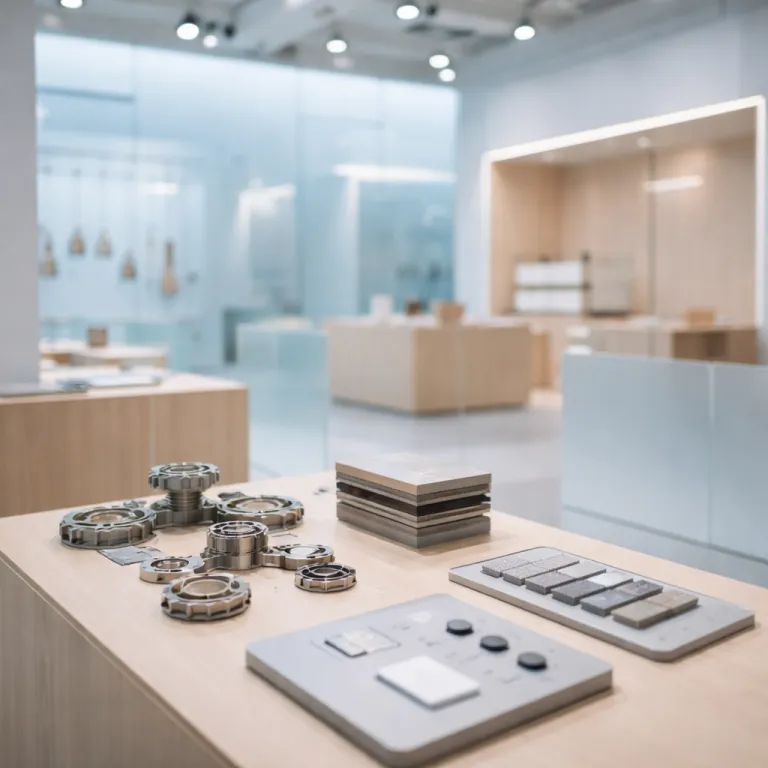
From specification display to experiential booth strategy in manufacturing fairs
Manufacturing exhibitors in Japan still over invest in panels filled with specifications and under invest in experiential booth strategy. At venues such as ものづくりワールド or MEX金沢, this gap becomes obvious when engineers walk past rows of similar machines and only stop where the manufacturing trade show booth experience has been carefully orchestrated. The shift from static explanation to structured experience is no longer a creative option but a business requirement.
Visitor behavior data is blunt; most manufacturing visitors judge a booth’s value in about 3 seconds, and research on exhibition direction shows that visual elements account for roughly 80% of that first filter. For example, an internal 2023 timing study at a Tokyo industrial fair by a major display vendor (unpublished client research) reported an average initial gaze of 2.7 seconds and found that color contrast and motion explained more than three quarters of the stop-or-pass decision. In this context, a company that still treats booth design as an extension of its catalogue or web brochure is effectively ceding engagement and qualified sales opportunities to competitors that stage a clear customer journey. The exhibitors that win are those that treat the booth as a compact platform for services, technology, and management conversations rather than a warehouse of metal parts.
For decision makers, the core question is not whether to adopt an experiential approach but how to operationalize it within realistic constraints of budget, staffing, and logistics. A robust manufacturing exhibition booth concept for industrial visitors must connect three layers; the strategic narrative of the business, the concrete problems of the customer, and the physical choreography of people, machines, and digital content on a limited floor plan. When these layers align, even a 9 square meter space can outperform larger neighbors in both customer engagement and downstream sales pipeline.
In manufacturing trade shows, experiential design also changes the internal role of marketing and event teams. Instead of simply ordering furniture and printing panels, the exhibition équipe becomes a cross functional hub that integrates engineering, product management, and sales programs into one coherent offering. This shift demands new capabilities in data management, content production for web services, and scenario planning, but it also elevates the booth from cost center to recognized global showcase of the company’s innovation.
Three step experience design: problem, immersion, solution
A practical 製造業 展示会 ブース設計 体験 starts with a simple three step script; articulate the visitor’s problem, stage a short but vivid experience, and then connect that experience to a concrete solution and next action. At ものづくりワールド, the most effective booths for production engineering or procurement visitors open with a clear problem statement such as cycle time loss, defect variability, or supply risk, not with a generic company profile. This framing respects the visitor’s time and immediately positions your business as a partner in problem solving rather than a vendor pushing products.
The immersion step should engage at least two senses through a combination of compact demo machines, digital signage, and tactile samples that make the underlying technology legible. Current trends show that the use of demo machines that visitors can operate themselves significantly raises both understanding and emotional engagement, especially when combined with dynamic digital content on a large screen. Here, a well structured platform of web services and cloud based monitoring dashboards can be simulated on site, allowing visitors to experience how your management tools and programs would feel in their own factories.
The final step is to translate that short experience into a tailored solution narrative and a measurable sales opportunity. Staff must be trained to pivot from explaining features to mapping the observed reaction of the customer onto a specific configuration of services, including after sales support, integration with existing systems, and global rollout scenarios. For a deeper view on how experiential formats reshape B2B engagement in Japan, many planners now benchmark against internal or third party analyses such as the 2026 B2B experiential engagement review on Japanese manufacturing event strategies, then adapt those insights to their own booth design.
Structuring conversations around this three step flow also simplifies internal alignment and KPI tracking. Marketing can define which problems to highlight, engineering can specify which demo states best reveal the innovation, and sales can script the closing questions that qualify the lead and set up post show follow up on the web or via digital platforms. When all three groups share the same experiential script, the manufacturing booth experience becomes a repeatable management asset rather than a one off creative exercise.
Closing the information gap for engineers and procurement visitors
Many Japanese manufacturing booths still miss the mark because they speak in the language of corporate branding while visitors arrive with highly operational questions. Production engineers and procurement managers walking through MEX金沢 or regional machine fairs want to understand takt time impact, maintenance regimes, and integration risks, yet the typical booth design still foregrounds generic messages about being a leading global company. This mismatch erodes trust and wastes the precious seconds in which visitors decide whether to engage.
A high quality industrial trade show booth plan addresses this by mapping each target persona to a specific information path that can be completed in under five minutes. For engineers, that path might combine a hands on demo of a compact actuator with a digital twin running on a cloud platform, showing real time load data and predictive maintenance alerts. For procurement, the path may emphasize total cost of ownership, multi site deployment services, and the stability of your supply chain, supported by clear management dashboards accessible via secure web services.
Exhibitors that excel at customer engagement in Japan often use layered information design; a bold visual hook, a concise technical storyboard, and then deeper documentation accessible via QR codes that link to a dedicated web page or digital catalog. This approach respects the time pressure of the aisle while still offering a wide range of detailed data for serious evaluation after the show. For a broader perspective on how experiential events are reshaping B2B engagement in Japan, practitioners increasingly refer to internal white papers and market analyses on how experiential events reshape B2B engagement in Japan and then localize those principles to their own sector.
In practice, closing the information gap also requires disciplined content management before the event. The exhibition équipe must curate which technical documents, case studies, and service descriptions will be physically present, which will be shown on digital screens, and which will be delivered later through follow up programs on the web. When this curation is done well, the 製造業 展示会 ブース設計 体験 becomes a coherent narrative that guides different types of businesses from first contact to concrete next steps without overwhelming them.
Selecting and staging demo machines for maximum impact
The heart of many manufacturing booths is the demo machine, yet exhibitors often bring either oversized equipment that dominates the space or small devices that fail to convey real world impact. A disciplined experiential booth design for manufacturing treats demo selection as a strategic decision, balancing logistics, narrative power, and safety. The rule of thumb is clear; bring the smallest configuration that can still dramatize the core value of your technology in under two minutes.
Case studies from Japanese fairs show that centering the booth around a single, well staged demo can double the number of serious business discussions compared with a scattered layout of multiple static units. One documented example from an internal post show report describes how a company reoriented its booth around a single interactive demo machine and achieved a twofold increase in both the number of negotiations and the final closing rate. In that case, average dwell time in front of the demo rose from 38 to 71 seconds, qualified leads increased from 120 to 214, and the proposal conversion rate improved from 18% to 29% over two consecutive editions of the same show. The lesson is straightforward for management teams; depth of experience beats breadth of catalogue when floor space and visitor attention are constrained.
Staging also matters as much as the hardware itself, because visitors respond to the choreography of movement, light, and sound. Combining the demo with synchronized digital signage, clear floor markings, and a simple three step instruction panel helps even busy global buyers understand what to do and what to watch. Integrating a cloud connected dashboard that visualizes performance data on a tablet or large screen can further elevate the perceived innovation level and open conversations about remote services, web based monitoring, and long term customer engagement programs.
From a practical standpoint, exhibitors should prototype the entire demo flow in their own facility before committing to the final booth design. This includes timing the full cycle, testing noise levels, verifying safety measures, and training staff to narrate the experience in both Japanese and English for international businesses. When this rehearsal is combined with a clear staffing plan and simple management checklists, the manufacturing trade show booth experience becomes robust enough to handle peak traffic without breaking down or confusing visitors.
Measuring ROI of experiential booths and preparing for immersive futures
Without hard metrics, experiential booths risk being dismissed by finance teams as theatrical but unproven. A rigorous 製造業 展示会 ブース設計 体験 therefore embeds measurement into the layout and staffing plan from the outset. The most effective exhibitors track three core indicators; average dwell time, business card acquisition rate, and conversion from booth interaction to qualified sales meetings.
In practice, dwell time can be estimated through simple manual counts or low cost digital sensors, while lead quality is assessed by tagging each contact according to role, project timeline, and budget authority. As a baseline, many teams treat 30–45 seconds of average dwell time at the main demo, at least 60% of leads tagged as engineers or procurement with active projects, and a 15–25% conversion from booth interaction to follow up meetings as reasonable starting thresholds, then aim for 20–30% uplift over two to three events. When these data points are correlated with specific demo experiences or content zones, management gains a clear view of which parts of the booth actually drive business outcomes. Over several events, this evidence base allows the company to reallocate budget from low impact giveaways to higher impact services such as staff training, content production, or cloud based demo platforms.
Forward looking exhibitors in Japan are also experimenting with VR and AR layers that sit on top of physical demos, especially for large equipment that cannot be transported to venues like Tokyo Big Sight or INTEX Osaka. These immersive tools are most effective when they extend, rather than replace, the tactile manufacturing booth experience by showing internal mechanisms, multi site deployments, or long term performance scenarios that cannot be demonstrated on the floor. As AI driven personalization and video rich content become standard expectations, the booth increasingly functions as a hybrid platform that connects on site engagement with ongoing digital touchpoints on the web.
For teams building internal business cases, it is useful to benchmark against structured frameworks for B2B experiential events, such as those discussed in analyses of high impact manufacturing exhibitions in Japan. These resources help clarify how to position the booth within a wider range of marketing and sales programs, and how to argue for multi year investment in experiential capabilities rather than one off spending. Ultimately, the exhibitors that treat the 製造業 展示会 ブース設計 体験 as a long term management asset, supported by recognized global best practices and disciplined measurement, will be the ones that turn limited floor space into sustained competitive advantage.
FAQ
How should we prioritize content when booth space is limited ?
Start by defining one or two core problems your target visitors need to solve and build the entire experiential manufacturing booth concept around those issues. Prioritize a single strong demo, a concise visual storyboard, and clear next steps for follow up, and move secondary information to digital channels accessible via QR codes. This focus ensures that even a small booth can deliver a coherent narrative and meaningful customer engagement.
What is the minimum data set needed to evaluate experiential booth ROI ?
At a minimum, track visitor dwell time in front of key demos, the number and quality of leads captured, and the conversion rate from booth interaction to post show meetings or proposals. Combine these figures with basic cost data for space, design, and staffing to estimate ROI over several events. Over time, refine your metrics to include repeat visits, digital content access, and contribution to long term sales pipeline.
How can we align engineering, sales, and marketing around one booth concept ?
Use the three step framework of problem, immersion, and solution as a shared language across departments. Ask engineering to define which demo states best reveal the technology, marketing to craft the visual and digital story, and sales to script the qualifying questions and offers. When all teams co create the 製造業 展示会 ブース設計 体験, alignment improves and on site execution becomes more consistent.
Are VR and AR necessary for effective manufacturing booths in Japan ?
VR and AR are not mandatory, but they are increasingly useful when physical constraints prevent you from bringing full scale equipment or complex systems. They work best as extensions of a tangible demo, showing internal structures, remote monitoring, or multi site deployments that cannot be replicated on the floor. The priority remains a clear, hands on experience; immersive tools should enhance, not replace, that foundation.
How can regional manufacturers compete with large global brands at major fairs ?
Regional companies can compete by focusing on sharp problem definition, highly relevant demos, and disciplined follow up rather than on booth size or lavish decoration. A well crafted manufacturing trade show booth experience that speaks directly to local production challenges often resonates more than generic global branding. Measured by lead quality and negotiation depth, smaller but focused exhibitors frequently outperform larger neighbors that rely on scale alone.
Pre-show checklist for experiential manufacturing booths
To make these principles actionable, many teams use a concise pre-show checklist: define two priority visitor problems and one core demo; map a five minute information path for engineers and procurement; finalize layered content (hook, storyboard, QR-linked details); rehearse the full demo flow with timing and safety checks; train staff on the problem–immersion–solution script in Japanese and English; set target metrics for dwell time, lead tags, and meeting conversions; and prepare simple forms or digital tools to capture and code every interaction consistently.