April 2026 Japan trade fairs ROI playbook for B2B marketers
Note: This article summarizes public information and practitioner experience as of early 2026. Always confirm final dates, layouts, and regulations with official organizers and venue operators before committing budget.
April trade fairs as a stress test for B2B strategy
For Japanese B2B marketers, the cluster of April 2026 trade fairs is not just a seasonal peak but a stress test of exhibition strategy and return on investment. With parts of Tokyo Big Sight’s East halls scheduled for large scale renovation around that period (exact timing subject to official confirmation from Tokyo Big Sight and the Tokyo Metropolitan Government), the center of gravity for trade fairs and industry expos is fragmenting across Tokyo, Chiba, Aichi, and Osaka, and that fragmentation changes how you should read every prospectus and floor plan. The question is no longer whether to attend spring exhibitions but which specific April 2026 shows will genuinely move your pipeline and which will quietly dilute your budget.
Japan IT Week Spring, Interpets Tokyo, NexTech Week Spring, Medtec Japan, and the AI Expo Spring now compete for the same marketing and sales budgets, while newer conferences such as GENESIS and AI/DX Sales & Marketing Spring add another layer of choice. Each April B2B exhibition promises access to leading technology, full spectrum conference programs, and cutting edge product demonstrations, yet the structural constraint of reduced Tokyo Big Sight capacity forces organizers to compress or relocate content. For decision makers, this is the year to shift evaluation criteria from raw visitor counts to the power of qualified conversations per square metre and per staff day, and to benchmark each show against the cost per sales accepted opportunity.
Venue dispersion toward Makuhari Messe, Intex Osaka, Port Messe Nagoya, Aichi Sky Expo, and Tokyo International Forum also changes the economics of travel, logistics, and on site staffing. A single spring trade fair used to cover multiple verticals in one convention center, while now the same week may require separate teams in Koto, Chiba, and Osaka, which raises both direct costs and coordination complexity. The winners will be marketing leaders who treat April as a portfolio of business experiments rather than a single annual bet on one mega show, continuously reallocating budget toward the events that prove their impact.
Reading “scaled down” and “registration open” signals behind the brochure
Official websites for April 2026 exhibitions increasingly use euphemisms such as “optimized layout” or “compact format” instead of clearly stating that an event is a 規模縮小開催. When you read these pages, treat every mention of shared halls, partial use of the convention center, or merged zones as a signal to request hard data on net exhibition area, exhibitor count, and expected visitor segments. For B2B marketers, the ability to decode such media language is now as critical as creative skills or CRM expertise, because it directly affects your April 2026 Japan trade fairs ROI.
Three figures to request from organizers
- Audited visitor profile: Ask for verified attendance data by job role and industry, not just total footfall, because decision makers and budget holders matter more than raw headcount.
- Leads-per-exhibitor benchmarks: Request historical conversion metrics such as average leads per exhibitor and lessons learned from previous editions, ideally shared through an advisory board briefing or post show education session, and cross check them against your own CRM data from earlier years.
- Segmented registration funnel: Examine whether registration is open with tiered campaigns that segment prospects by interest in cloud, AI, manufacturing, or sports tech, since such targeting reveals whether the organizer truly understands your products and services.
As a reference point, Tokyo Big Sight’s published visitor statistics for Japan IT Week Spring 2024 indicate more than 60,000 total visitors across the combined fairs, with several ICT exhibitors reporting internal averages of roughly 80–120 scanned leads per standard booth when located near high traffic zones. If the organizer of an April 2026 event cannot provide similarly concrete, role based data or refuses to share how they will maximize impact for each exhibitor, treat that show as a branding play at best, not a pipeline engine. In a constrained venue year, transparency on trends and audience quality is the real cutting edge advantage, and lack of it is a clear risk signal.
Venue shifts, visitor flows, and the new economics of booth density
The partial closure of Tokyo Big Sight’s East halls forces multi hall events like Japan IT Week Spring and NexTech Week Spring to rethink visitor flow, and that directly affects your booth’s business performance. When a spring exhibition stretches across distant halls or even separate buildings, casual traffic drops and only visitors with clear intent will walk the full route, which can either raise or lower your lead quality depending on placement. You should therefore negotiate not only booth size but also adjacency to anchor zones such as AI, cloud, or data analytics pavilions, and ask how the organizer plans to signpost routes between them.
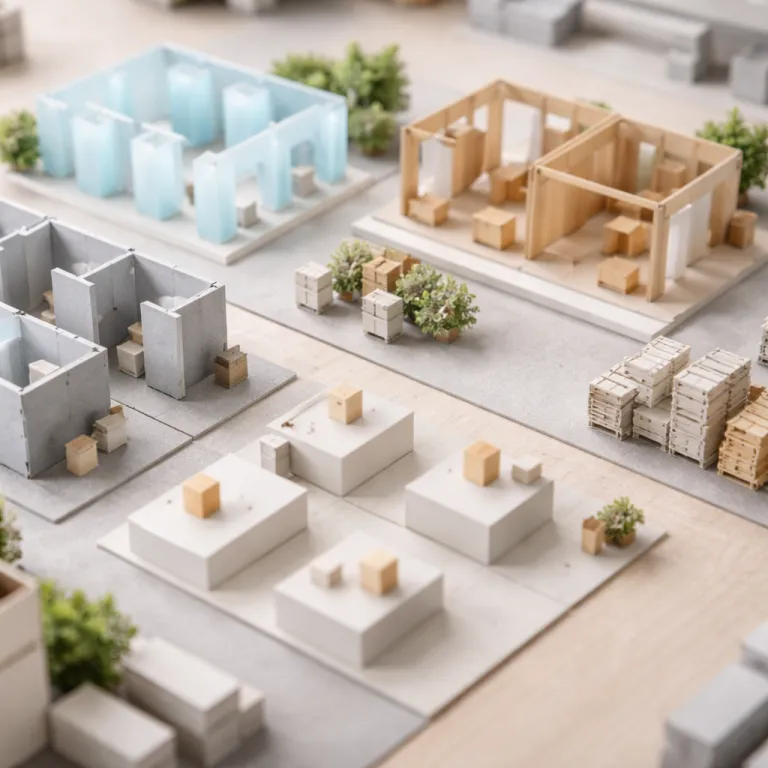
At Makuhari Messe and Intex Osaka, organizers are compensating for dispersed layouts by increasing the number of conference sessions and on floor mini stages. This shift turns the exhibition into a hybrid between conference and trade fair, where education content creators and media partners pull traffic toward specific clusters, and exhibitors near those clusters benefit disproportionately. For any April 2026 show held in these venues, ask to see heat map simulations or at least historical flow analysis before finalizing your location, and sketch a simple internal heat map diagram that marks keynote stages, catering zones, and your preferred booth positions.
Illustrative heat map scenario: imagine a floor plan where a main keynote stage sits at the center of Hall 5, catering is concentrated at the rear of Hall 6, and an AI pavilion anchors the entrance to Hall 4. In post event reports from several 2024 technology expos at Makuhari Messe, exhibitors positioned within roughly 20–30 metres of such stages often recorded 30–40% higher visitor interactions than comparable booths in peripheral aisles. Newer venues like Aichi Sky Expo and Port Messe Nagoya offer more compact convention center footprints, which can raise the density of innovation collaboration and spontaneous strategic partnerships. However, they also attract a different regional mix of the economy, with stronger manufacturing and automotive representation and fewer headquarters level visitors from central Tokyo. In this context, the right April trade fair for a Nagoya focused, industry forward strategy may be a manufacturing expo rather than a generic tech show in Koto, especially if your account list is concentrated in the Chukyo industrial region.
Budget allocation, AI driven content, and the rise of owned conferences
Marketing leaders planning around April 2026 B2B exhibitions face a sharper trade off between large trade fairs and owned conferences, especially as artificial intelligence reshapes how content is produced and consumed. Interpets Tokyo, Medtec Japan, and AI Expo Spring each offer strong industry ecosystems, yet the cost per meaningful meeting is rising as travel, booth construction, and staffing inflate faster than many B2B budgets. This is why more vice president level executives now benchmark exhibitions directly against the ROI of smaller, highly curated company conferences and invite only executive briefings.
One practical approach is to treat each major April show as a hub for media production and relationship building rather than just a lead capture exercise. Use the show to record interviews with conference speakers, co create content with influential creators, and host closed door roundtables with target accounts, then amplify these assets through your own channels and newsletter programs. In parallel, design your owned conference to go deeper into product technology and full spectrum solutions, using insights and lessons learned from April shows to shape the agenda and to refine your account based marketing playbook.
Artificial intelligence tools now make it easier to analyze exhibition data, cluster prospects by behavior, and personalize follow up sequences after any spring trade fair. The real competitive edge comes when you combine this technology with human judgment about which strategic partnerships to pursue and which markets to exit, based on what you read in the aisles and not just in dashboards. In a year of venue constraints and shifting trends, the most resilient strategy is to use April’s trade fairs as a live laboratory for shaping future growth rather than as isolated events, and to document every experiment in a shared internal playbook.
How global references and cross industry learning sharpen Japan’s April playbook
Senior Japanese marketers increasingly benchmark April 2026 exhibitions against global events at venues such as the Javits Center in New York, where cloud, data, and AI ecosystems converge under one roof. While Japan’s exhibition infrastructure is different, the comparison clarifies what “leading” should mean in terms of innovation, advisory board governance, and the power of cross vertical programming. The goal is not to copy a New York style mega show but to adapt its best practices to Tokyo, Chiba, Nagoya, and Osaka, and to raise expectations for how Japanese events report outcomes to exhibitors.
For example, GENESIS positions itself as a co creation conference that brings together technology vendors, startup creator communities, and large enterprise decision makers around themes like innovation collaboration and industry forward transformation. If executed well, such an April 2026 style conference can complement traditional expos by offering curated speaker lineups, structured matchmaking, and clear pathways to strategic partnerships beyond the show floor. The key test will be whether its registration process screens participants for intent and role, or simply chases volume, and whether post event reporting includes metrics that exhibitors can map to their sales funnels.
Across sectors from sports tech to medical devices, the most sophisticated exhibitors now treat each April trade fair as one node in a year round engagement graph. They register to exhibit where the audience mix, education program, and media presence align with their growth thesis, and they skip shows that cannot articulate how they are shaping future demand in their industry. In this environment, the old metric of booth count gives way to a sharper question for every CMO and VP Sales in Japan’s B2B economy — choose the events where your presence changes the conversation, not just the floor plan, and where organizers can demonstrate that change with credible data.
Key statistics on April trade fairs in Japan
The figures below are indicative ranges compiled from public exhibition calendars and organizer summaries; always confirm the latest numbers with primary sources such as Tokyo Big Sight, Makuhari Messe, and individual show offices. For example, Tokyo Big Sight and Makuhari Messe publish annual venue utilization data and floor area specifications that allow you to validate whether a claimed “full hall” actually matches historical usage.
| Indicator (April 2026, Japan) | Typical range / example |
|---|---|
| Number of major B2B trade fairs and conferences | Approximately 8–12 nationwide, spanning technology, pets, manufacturing, and medical devices |
| Largest single exhibition area used in April | On the order of 100,000–120,000 square metres across venues such as Tokyo Big Sight and Makuhari Messe (exact figures vary by year and layout; verify with the latest venue specifications and organizer reports) |
| Core metropolitan areas hosting flagship events | Tokyo, Osaka, and Nagoya as the primary triangle for B2B exhibitions |
| Representative anchor events | Interpets Tokyo, AI Expo Spring, AFF Osaka Spring Summer, Monozukuri World Nagoya, Medtec Japan |
Frequently asked questions about April B2B exhibitions in Japan
How should we choose between Tokyo Big Sight and regional venues in April ?
Tokyo Big Sight still offers the broadest mix of industries and media attention, which benefits companies seeking nationwide brand exposure and cross sector leads. Regional venues such as Intex Osaka and Port Messe Nagoya, however, often deliver higher concentration of specific manufacturing or automotive segments, which can raise the quality of conversations for niche suppliers. The practical approach is to prioritize Tokyo for horizontal technology and data offerings, while using regional April exhibitions for deeper engagement with defined clusters and for testing localized go to market strategies.
What KPIs best capture the ROI of exhibiting in April ?
For April 2026 trade fairs, the most useful KPIs go beyond raw lead counts and focus on opportunity creation and deal velocity. Track metrics such as number of meetings with decision makers, pipeline value attributed to the show, and conversion from booth interaction to qualified opportunity within 60 days. Combine these with qualitative indicators like quality of innovation collaboration discussions and number of follow up workshops scheduled, which often predict long term revenue better than badge scans, and compare them across events to decide which April shows to renew.
How is AI changing the way exhibitors use April trade fairs ?
Artificial intelligence is reshaping both pre event targeting and post event follow up for spring exhibitions. Exhibitors now use AI tools to analyze registration data, score visitors in real time, and personalize outreach based on sessions attended or content consumed. After the show, AI driven analytics help teams prioritize accounts, identify cross sell opportunities in their products and services portfolio, and refine which events to attend next year based on actual revenue impact, not just impressions or media coverage.
When does it make sense to run an owned conference instead of exhibiting ?
Owned conferences become attractive when your brand already commands strong pull in a focused segment and when April mega shows cannot deliver the depth of dialogue you need. If your sales cycle requires multi hour workshops, detailed product technology demos, or confidential roadmap discussions, a curated company conference often yields better outcomes than a noisy trade fair. Many Japanese firms now blend both models, using April exhibitions for top of funnel reach and their own conferences for late stage deal acceleration, executive education, and partner enablement.
How early should we commit to booth reservations for April events ?
Given the temporary reduction in Tokyo Big Sight capacity, prime locations for April 2026 exhibitions are typically allocated 9 to 12 months in advance. However, you should delay final commitment until organizers share clear floor plans, segmented visitor projections, and details of the education and conference programs. This balance between early negotiation and data driven validation helps you secure favorable terms without locking into events that later reveal weak audience fit, and it gives you time to compare multiple April 2026 Japan trade fairs on a like for like ROI basis.
References
- J NET21, April exhibition calendar for small and medium enterprises in Japan (consult the latest edition for confirmed dates and venues).
- KB Info, national schedule of trade fairs and industry expos, including visitor statistics where available.
- EventBank, annual exhibition calendar and venue utilization analysis for Japan, used as a secondary reference for indicative area figures.