Summer executive summits as an investment, not an expense
For Japanese CEOs, the サマーダボス 経営者 サミット 夏 season is no longer a prestige tour but a capital allocation decision. When a three day World Economic Forum Annual Meeting of the New Champions in Tianjin (often called “Summer Davos”) competes with a one day domestic retreat in Kyoto or Karuizawa, the question becomes simple yet brutal: which combination of executive summits will generate the highest strategic and financial return per hour of your living management time.
According to the World Economic Forum, the Annual Meeting of the New Champions typically gathers around 1,500 participants across government leaders, global corporates, and scale up founders, while a domestic 合宿型サミット such as the M&A focused XDEAL conference caps attendance near 500 based on its published program data. That numerical gap hides a more important variable for your サマーダボス 経営者 サミット 夏 portfolio, namely the density of relevant conversations per corridor walk or dinner table. In practice, a smaller but curated collection of Japanese and international peers can outperform a massive global book of name cards when your agenda is M&A origination or joint venture scouting.
Think of each summit as a living strategic asset rather than a one off event, and treat your July calendar like a carefully edited bilingual edition of a management book. Inside that personal collection, Summer Davos plays the role of a thick English and German language volume on global macro and technology, while domestic retreats resemble a rare Japanese language field manual on your specific industry. The art lies in bringing both editions into a complete, coherent story that your board can read as a clear capital allocation article rather than scattered articles without a thesis.
Summer Davos versus domestic retreats: cost, access, and networking density
From a pure P&L perspective, the サマーダボス 経営者 サミット 夏 package is heavy, with business class flights, three to four hotel nights, and a high participation fee. A domestic 合宿型サミット in Japan compresses direct costs and time away from headquarters, yet often increases the hours of unstructured interaction per counterpart. The trade off is between breadth of English and German speaking networks at Summer Davos and depth of Japanese language deal making back home.
At Summer Davos, you move inside a multilingual arena where government ministers, central bankers, and global CEOs share the stage, which is invaluable if your strategy depends on regulatory shifts or cross border policy. Domestic retreats such as XDEAL or sector specific camps in Hakone or Niseko narrow the cast to owners, CFOs, and corporate development heads, which raises the probability that a two hour dinner turns into a concrete M&A story. For example, XDEAL’s own case studies describe deals where an initial late night discussion at the bar evolved into a signed transaction within twelve months, illustrating how retreat style programs can compress the M&A timeline. For many mid sized listed companies, one international summit plus one domestic retreat in the サマーダボス 経営者 サミット 夏 window forms a balanced portfolio of exposure and execution.
Decision makers should treat public program sessions almost like a curated article collection and use them to filter who deserves scarce bilateral time, rather than as content to passively read. A practical method is to pre tag sessions in your digital schedule as either policy, technology, or transaction, then assign each a clear objective in your internal briefing book. For a deeper framework on how healthcare executives are rethinking such trade offs in Japan, the analysis on high impact B2B healthcare conferences offers a useful parallel for evaluating summit formats and networking density.
Designing your July summit portfolio: goals, schedule, and team roles
The most disciplined Japanese executives enter the サマーダボス 経営者 サミット 夏 period with three explicit takeaways defined in advance. One might be a shortlist of five potential M&A targets, another a refined view on government policy in your sector, and the third a concrete partnership with a technology scale up. Anything that does not contribute to these three items becomes optional, no matter how prestigious the session title or how rare the speaker.
Before boarding a plane to Summer Davos or a Shinkansen to a domestic 合宿型サミット, convert these goals into a written one page article style brief for your internal collection. Circulate it in both Japanese and English to your strategy and IR teams, and treat it as a working book that will be updated after each key meeting. During the event, your aide or chief of staff should log every relevant conversation inside a structured template, capturing time, counterpart, topic, and next action in clear language rather than scattered notes.
Many executives underestimate how quickly impressions fade once they return to daily operations, so a disciplined debrief ritual is essential to make the サマーダボス 経営者 サミット 夏 investment complete. Within forty eight hours of each summit, hold a ninety minute session where you and your team read through the meeting log, extract three to five priority stories, and assign owners and deadlines. To keep this ritual practical and repeatable, use a simple checklist:
- Confirm which meetings generated concrete deal or policy follow ups.
- Summarize each priority item in three sentences that a busy board member can read quickly.
- Translate key insights into both Japanese and English so they can be reused in IR decks and internal articles.
- Archive all notes in a shared digital folder, turning them into a living collection for future summit preparation.
For a cross industry view on how such post event discipline reshapes B2B conference ROI in Japan, the framework presented in this analysis of patient access focused healthcare events is directly applicable to executive summits.
The unique value of retreat style summits and how to measure ROI
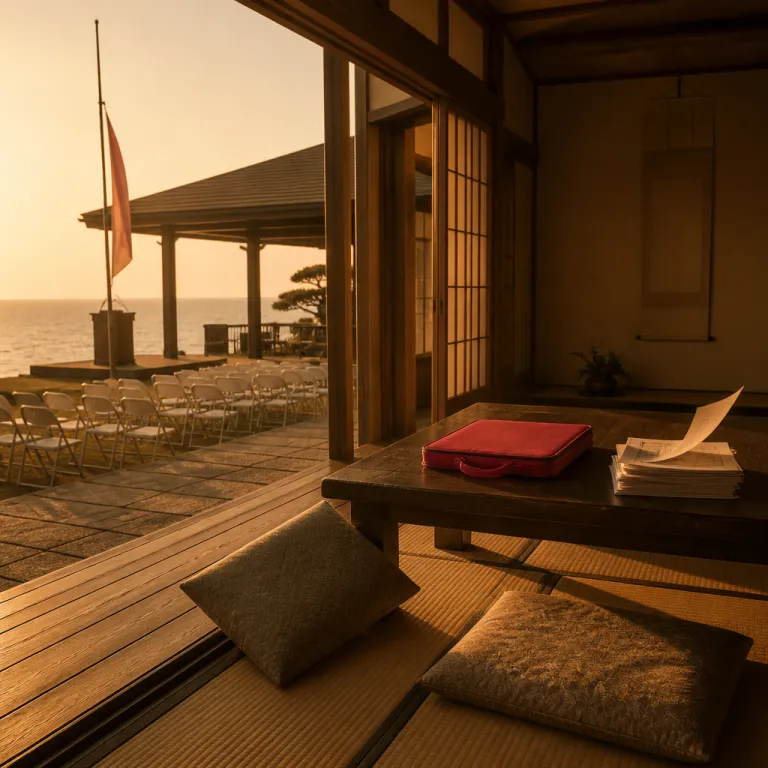
Retreat style domestic summits compress leaders into the same hotel, onsen, and dining spaces for twenty four hours, which changes the physics of networking compared with Summer Davos. When you share breakfast, panel discussions, and late night bar conversations with the same thirty to fifty peers, the サマーダボス 経営者 サミット 夏 experience shifts from exchanging cards to co creating strategy. That intensity is why M&A specialized conferences like XDEAL have already seen multiple deals close among participants, according to their official case studies and post event reports.
To evaluate these retreats, treat each as a living laboratory rather than a static conference, and define KPIs before you arrive on site. Hard metrics include the number of qualified deal leads, follow up meetings scheduled within thirty days, and concrete joint venture or investment proposals, while softer indicators track how free and candid the dialogue felt compared with your usual boardroom. In this sense, the サマーダボス 経営者 サミット 夏 portfolio should mix the wide angle lens of Summer Davos with the close up, inside view that only a domestic 合宿型サミット can bring.
From a content perspective, think of plenary sessions as a first edition of ideas and use corridor conversations to refine them into a more complete writer level narrative you can later share with your board in Japanese or English. Over several summers, your notes, decks, and internal articles will form a rare collection of strategic insights that no external book or public article can replicate. For a broader perspective on how seasonal healthcare conferences are being re engineered as strategic assets, the detailed review at this patient access week analysis illustrates how to turn any summit calendar into a repeatable investment cycle.
FAQ
How should a CEO choose between Summer Davos and a domestic retreat
If your priority is understanding global macro trends, technology shifts, and government policy directions across multiple regions, Summer Davos offers unmatched breadth and access. When your main objective is concrete deal origination, M&A discussions, or deep collaboration with Japanese peers, a curated domestic 合宿型サミット usually delivers higher networking density per hour. Many executives therefore allocate budget to one サマーダボス 経営者 サミット 夏 trip plus one domestic retreat, balancing global exposure with execution focused conversations.
What is the minimum preparation required before attending a summer executive summit
At a minimum, define three specific outcomes you expect from the サマーダボス 経営者 サミット 夏 season and write them down in a one page brief. Map potential counterparts who can help you achieve each outcome, and pre arrange as many bilateral meetings as possible before the program starts. Finally, align your internal team on roles for note taking, follow up tracking, and post event debrief so that insights do not dissipate once you return.
How can I quantify the ROI of retreat style executive summits
Start by tracking hard metrics such as the number of qualified leads, signed NDAs, and follow up meetings scheduled within thirty days of the event. Complement these with softer indicators like the depth of strategic conversations, the level of candid feedback received, and the extent to which peers shared inside views on their business. Over two to three サマーダボス 経営者 サミット 夏 cycles, compare these data points across events to refine your portfolio and drop low yield summits.
Are summer summits still valuable when much content is available online for free
Plenary content often appears later as public articles, videos, or even in book form, but the real value of the サマーダボス 経営者 サミット 夏 calendar lies in off the record dialogue. Retreats and Summer Davos alike provide rare opportunities to test ideas, sense check acquisitions, and read non verbal signals from peers and regulators. That layer of tacit knowledge, exchanged in small groups and informal settings, cannot be replicated by simply reading English or Japanese language coverage after the fact.
How should mid sized companies structure their annual budget for executive summits
For companies with 100 to 5,000 employees, a pragmatic approach is to ring fence a dedicated budget line for one international summit and one domestic retreat during the サマーダボス 経営者 サミット 夏 period. Treat travel and participation fees as part of your strategic investment envelope, not as discretionary entertainment, and require a short internal article after each event summarizing outcomes. Over time, this discipline builds a proprietary collection of insights and relationships that compounds in value, much like a carefully managed portfolio of strategic assets.